 Add to Chrome
 Add to Firefox
 Add to Edge
ABot-Earth 0.5: Generative 3D Earth Model
Jun 08, 2026
We present ABot-Earth 0.5, a generative 3D framework designed to synthesize vast, seamless 3D environments from ubiquitous, geospatially referenced satellite imagery. To achieve this, we propose a novel generative model formulated directly with the 3D Gaussian Splatting (3DGS) representation. The model is trained on a diverse corpus of existing real-world urban reconstructions, learning to generate realistic geometry and textures. At inference, it synthesizes novel 3D scenes conditioned solely on satellite imagery at a scalable rate of under 10 minutes per square kilometer, while demonstrating exceptional realism. The framework is designed for accessibility, with integrated hierarchical level-of-detail (LOD) structures that permit real-time, interactive visualization on web-based map engines. This high-fidelity simulation sandbox effectively mitigates the sim-to-real domain gap, enabling critical downstream Embodied AI applications like closed-loop UAV navigation. By providing an ultra-low-cost and high-efficiency solution, ABot-Earth 0.5 significantly lowers the technical and financial barriers to large-scale 3D reconstruction and empowers the future of global digital earth visualization.

MineExplorer: Evaluating Open-World Exploration of MLLM Agents in Minecraft
May 29, 2026Multimodal large language models (MLLMs) have shown strong capabilities in perception, reasoning, and action generation. However, their ability to sustain exploration in dynamic open worlds remains unclear. Existing embodied and game-based benchmarks often compress interaction into short-horizon tasks or entangle success with domain-specific game mechanics. In this paper, we introduce MineExplorer benchmark for evaluating open-world exploration capabilities of MLLM agents in Minecraft. We first filter atomic tasks whose solutions rely heavily on Minecraft-specific knowledge to better reflect general open-world reasoning. Then we organize the benchmark around a ReAct-style capability formulation and compose atomic tasks into implicit multi-hop tasks. To further construct reliable instances, MineExplorer uses a multi-agent synthesis workflow that jointly designs task graphs, sandbox scenes, and rule-based milestone evaluators. Human evaluation shows that the multi-agent synthesis workflow produces significantly more reliable instances than a single-agent baseline. Experiments with advanced MLLM agents show that open-world exploration remains challenging, as strong models can handle many single-hop tasks but degrade sharply when hidden prerequisites must be coordinated over longer trajectories. Further analysis finds that task difficulty tracks agent completion, and larger models or thinking modes do not consistently translate into better performance. Code and dataset are available at https://github.com/Jometeorie/MineExplorer.
Mobile-Aptus: Confidence-Driven Proactive and Robust Interaction in MLLM-based Mobile-Using Agents
May 27, 2026Recent advancements in multimodal large language models (MLLMs) have shown exceptional potential in enabling mobile-using agents to autonomously execute human instructions. However, fully automated agents often try to execute tasks even when they are unable to resolve them, leading to the problem of over-execution. Previous studies solve it by training a interactive mobile-using agents to let agents request human interaction when agents can not complete user instructions. However, we find that these interactive agents tend to exhibit over-soliciting behavior, relying excessively on human intervention. To mitigate both over-execution and over-soliciting, we propose a universal confidence integration framework that enables confidence-driven proactive and robust interaction in MLLM-based mobile-using agents. The framework consists of two stages: interaction capability empowerment and confidence bias correction. In the interaction capability empowerment stage, agents learn through supervised fine-tuning to output both actions and confidence scores. In the confidence bias correction stage, agents learn to output more accurate confidence scores by combining semantic similarity retrieval with direct preference optimization. Experimental results show Mobile-Aptus achieves state-of-the-art performance on the four popular mobile-using agent benchmarks: OS-Kairos, AITZ, Meta-GUI, and AndroidControl. Mobile-Aptus consistently outperforms all baselines in offline benchmarks, with an average improvement over 17\% in task success rate. In real-world dynamic experiments, Mobile-Aptus surpasses the baseline by 26% in task success rate with only 0.64 intervention steps per instruction. The codes are available at https://github.com/Wuzheng02/Mobile-Aptus.
GUI-CIDER: Mid-training GUI Agents via Causal Internalization and Density-aware Exemplar Reselection
May 27, 2026Despite the rapid progress of multimodal large language models in building Graphical User Interface (GUI) agents, their real-world task completion is fundamentally bottlenecked by a lack of world knowledge about GUI operations. Existing solutions typically rely on expensive multi-agent scaffolding or conventional post-training paradigms, such as Supervised Fine-Tuning (SFT) and Reinforcement Learning (RL). However, post-training only allows agents to implicitly absorb world knowledge through action annotations or reward signals, leading to inefficient trajectory memorization rather than genuine comprehension. Therefore, an approach that enables explicit learning of this knowledge is imperative. To this end, we propose GUI-CIDER, a mid-training method that explicitly internalizes GUI world knowledge through Causal Internalization and Density-aware Exemplar Reselection. GUI-CIDER operates in three stages: (1) data synthesis, which distills static planning and dynamic causal knowledge from GUI trajectories into text; (2) exemplar reselection, which filters the corpus by rewarding causal structures and penalizing semantic redundancy; and (3) mid-training, where the refined data is used to embed the acquired knowledge. Extensive experiments on two GUI knowledge benchmarks and three task completion benchmarks demonstrate that GUI-CIDER consistently improves both the agent's understanding of GUI operations and its task success rates.The codes are available at https://github.com/Wuzheng02/GUI-CIDER.
A General Framework for Multimodal LLM-Based Multimedia Understanding in Large-Scale Recommendation Systems
May 10, 2026Conventional recommendation systems frequently fail to fully exploit the high-dimensional semantic signals inherent in multimedia content, thereby limiting the fidelity of user preference modeling. While Multimodal Large Language Models (MM-LLMs) offer robust mechanisms for interpreting such complex data, their integration into latency-constrained, industrial-scale architectures remains a significant challenge. To address this, we propose a generalized framework for MM-LLM-driven multimedia understanding. Our methodology employs a tripartite architecture encompassing content interpretation, representation extraction, and systematic pipeline integration, instantiated via a LLaMA2-based model that generates descriptive captions subsequently ingested as tokenized categorical features. Empirical evaluation demonstrates the efficacy of this approach, yielding a $0.35\%$ increase in offline AUC and a $0.02\%$ improvement in online metrics at scale, substantiating the practical viability of leveraging MM-LLMs to enhance large-scale recommendation performance.
Causal Probing for Internal Visual Representations in Multimodal Large Language Models
May 07, 2026Despite the remarkable success of Multimodal Large Language Models (MLLMs) across diverse tasks, the internal mechanisms governing how they encode and ground distinct visual concepts remain poorly understood. To bridge this gap, we propose a causal framework based on activation steering to actively probe and manipulate internal visual representations. Through systematic intervention across four visual concept categories, our results reveal a divergence in concept encoding: entities exhibit distinct localized memorization, whereas abstract concepts are globally distributed across the network. Critically, this divergence uncovers a mechanistic driver of scaling laws: increasing model depth is indispensable for encoding distributed and complex abstract concepts, whereas entity localization remains remarkably invariant to scale. Furthermore, reverse steering uncovers that blocking explicit output triggers a surge in latent activations, exposing a compensatory mechanism between perception and generation. Finally, extending our analysis to visual reasoning, we expose a disconnect between perception and reasoning although MLLMs successfully recognize geometric relations, they treat them merely as static visual features, failing to trigger the procedural execution necessary for abstract problem-solving.
OS-SPEAR: A Toolkit for the Safety, Performance,Efficiency, and Robustness Analysis of OS Agents
Apr 27, 2026The evolution of Multimodal Large Language Models (MLLMs) has shifted the focus from text generation to active behavioral execution, particularly via OS agents navigating complex GUIs. However, the transition of these agents into trustworthy daily partners is hindered by a lack of rigorous evaluation regarding safety, efficiency, and multi-modal robustness. Current benchmarks suffer from narrow safety scenarios, noisy trajectory labeling, and limited robustness metrics. To bridge this gap, we propose OS-SPEAR, a comprehensive toolkit for the systematic analysis of OS agents across four dimensions: Safety, Performance, Efficiency, and Robustness. OS-SPEAR introduces four specialized subsets: (1) a S(afety)-subset encompassing diverse environment- and human-induced hazards; (2) a P(erformance)-subset curated via trajectory value estimation and stratified sampling; (3) an E(fficiency)-subset quantifying performance through the dual lenses of temporal latency and token consumption; and (4) a R(obustness)-subset that applies cross-modal disturbances to both visual and textual inputs. Additionally, we provide an automated analysis tool to generate human-readable diagnostic reports. We conduct an extensive evaluation of 22 popular OS agents using OS-SPEAR. Our empirical results reveal critical insights into the current landscape: notably, a prevalent trade-off between efficiency and safety or robustness, the performance superiority of specialized agents over general-purpose models, and varying robustness vulnerabilities across different modalities. By providing a multidimensional ranking and a standardized evaluation framework, OS-SPEAR offers a foundational resource for developing the next generation of reliable and efficient OS agents. The dataset and codes are available at https://github.com/Wuzheng02/OS-SPEAR.
Agent-Dice: Disentangling Knowledge Updates via Geometric Consensus for Agent Continual Learning
Jan 08, 2026Large Language Model (LLM)-based agents significantly extend the utility of LLMs by interacting with dynamic environments. However, enabling agents to continually learn new tasks without catastrophic forgetting remains a critical challenge, known as the stability-plasticity dilemma. In this work, we argue that this dilemma fundamentally arises from the failure to explicitly distinguish between common knowledge shared across tasks and conflicting knowledge introduced by task-specific interference. To address this, we propose Agent-Dice, a parameter fusion framework based on directional consensus evaluation. Concretely, Agent-Dice disentangles knowledge updates through a two-stage process: geometric consensus filtering to prune conflicting gradients, and curvature-based importance weighting to amplify shared semantics. We provide a rigorous theoretical analysis that establishes the validity of the proposed fusion scheme and offers insight into the origins of the stability-plasticity dilemma. Extensive experiments on GUI agents and tool-use agent domains demonstrate that Agent-Dice exhibits outstanding continual learning performance with minimal computational overhead and parameter updates. The codes are available at https://github.com/Wuzheng02/Agent-Dice.
OpenAI GPT-5 System Card
Dec 19, 2025This is the system card published alongside the OpenAI GPT-5 launch, August 2025. GPT-5 is a unified system with a smart and fast model that answers most questions, a deeper reasoning model for harder problems, and a real-time router that quickly decides which model to use based on conversation type, complexity, tool needs, and explicit intent (for example, if you say 'think hard about this' in the prompt). The router is continuously trained on real signals, including when users switch models, preference rates for responses, and measured correctness, improving over time. Once usage limits are reached, a mini version of each model handles remaining queries. This system card focuses primarily on gpt-5-thinking and gpt-5-main, while evaluations for other models are available in the appendix. The GPT-5 system not only outperforms previous models on benchmarks and answers questions more quickly, but -- more importantly -- is more useful for real-world queries. We've made significant advances in reducing hallucinations, improving instruction following, and minimizing sycophancy, and have leveled up GPT-5's performance in three of ChatGPT's most common uses: writing, coding, and health. All of the GPT-5 models additionally feature safe-completions, our latest approach to safety training to prevent disallowed content. Similarly to ChatGPT agent, we have decided to treat gpt-5-thinking as High capability in the Biological and Chemical domain under our Preparedness Framework, activating the associated safeguards. While we do not have definitive evidence that this model could meaningfully help a novice to create severe biological harm -- our defined threshold for High capability -- we have chosen to take a precautionary approach.
From Black Box to Insight: Explainable AI for Extreme Event Preparedness
Nov 17, 2025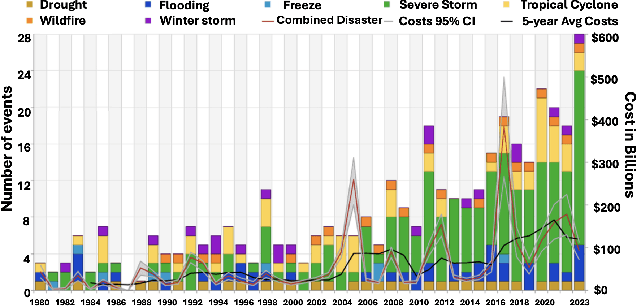
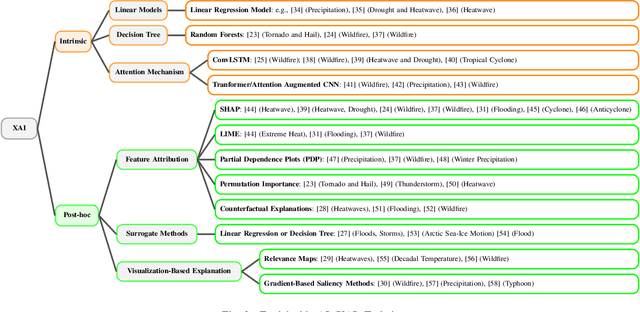
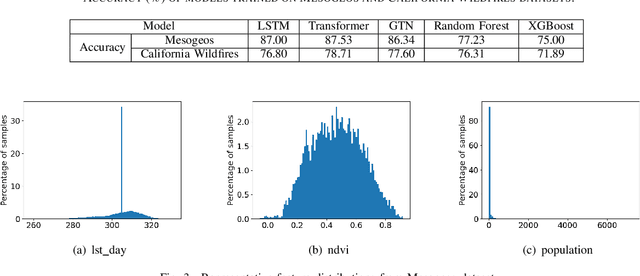
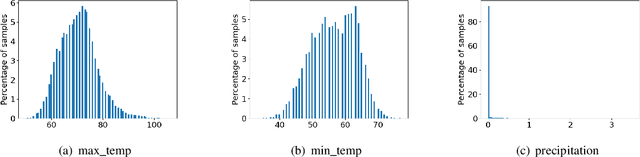
As climate change accelerates the frequency and severity of extreme events such as wildfires, the need for accurate, explainable, and actionable forecasting becomes increasingly urgent. While artificial intelligence (AI) models have shown promise in predicting such events, their adoption in real-world decision-making remains limited due to their black-box nature, which limits trust, explainability, and operational readiness. This paper investigates the role of explainable AI (XAI) in bridging the gap between predictive accuracy and actionable insight for extreme event forecasting. Using wildfire prediction as a case study, we evaluate various AI models and employ SHapley Additive exPlanations (SHAP) to uncover key features, decision pathways, and potential biases in model behavior. Our analysis demonstrates how XAI not only clarifies model reasoning but also supports critical decision-making by domain experts and response teams. In addition, we provide supporting visualizations that enhance the interpretability of XAI outputs by contextualizing feature importance and temporal patterns in seasonality and geospatial characteristics. This approach enhances the usability of AI explanations for practitioners and policymakers. Our findings highlight the need for AI systems that are not only accurate but also interpretable, accessible, and trustworthy, essential for effective use in disaster preparedness, risk mitigation, and climate resilience planning.